Oral Presentation World Lake Conference 2025
Challenges and management strategies for the brackish water ecosystems of Lakes Shinji and Nakaumi in the face of climate change and human activities (#5)
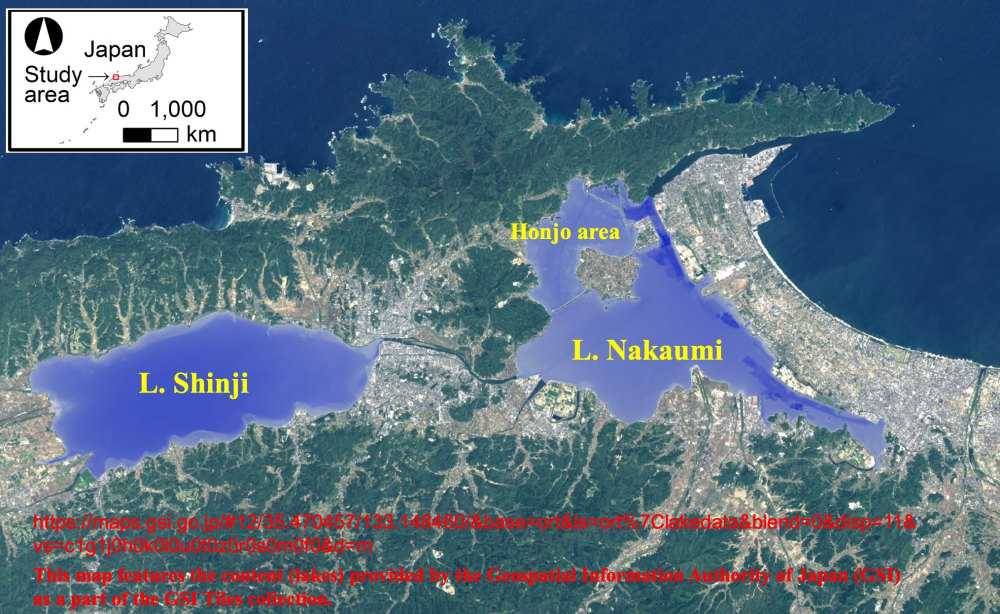
Lakes Shinji and Nakaumi are two interconnected estuarine water bodies located in the western part of Japan, forming an important brackish water system. Their surface areas are 79.1 km² and 86.2 km², with mean depths of 4.5 m and 5.4 m, respectively. While Lake Shinji is characterized by relatively low salinity (approximately 3 psu) due to its limited connection to the sea, Lake Nakaumi exhibits higher salinity (approximately 15 psu) as it is directly influenced by seawater inflow from the sea. The salinity balance between these two lakes plays a crucial role in sustaining their unique ecosystems, particularly the commercially and ecologically valuable clam (Corbicula japonica), which thrives in the low-salinity environment of Lake Shinji.
However, over the past 30 years, sea levels have risen by more than 20 cm, leading to increased salinity in both lakes. This trend is expected to continue, potentially altering aquatic habitats and affecting biodiversity. Rising air temperatures due to climate change are also driving increases in water temperature, which may further impact the physiological functions of aquatic organisms and disrupt seasonal biological cycles.
In addition to these climate-driven changes, artificial dredging in Lake Nakaumi has created deep depressions that exacerbate hypoxic conditions. These stagnant zones experience severe oxygen depletion, leading to the generation of toxic hydrogen sulfide, which poses a serious threat to aquatic life.
The hydrodynamics of Lake Nakaumi have also been significantly altered by past land reclamation projects, particularly the semi-closure of the Honjo area, which has disrupted the lake’s natural circulation. As a result, water exchange between different parts of the lake remains insufficient, exacerbating hypoxia and making it difficult for the ecosystem to recover naturally. These environmental changes reflect the long-term impacts of human interventions and highlight the challenges of balancing development with ecological conservation.
Addressing these complex issues requires an integrated approach that includes hydrodynamic and ecosystem modeling, long-term environmental monitoring, and policy-based management strategies. Restoring natural water flow, mitigating hypoxia, and controlling salinity levels will be critical for the sustainable management of these lakes. Given the accelerating effects of climate change and human activities, future conservation efforts must be based on scientific research to ensure the protection of key species like the clam and the long-term health of these estuarine ecosystems.